How Insurers Match Premium Payments to Policies
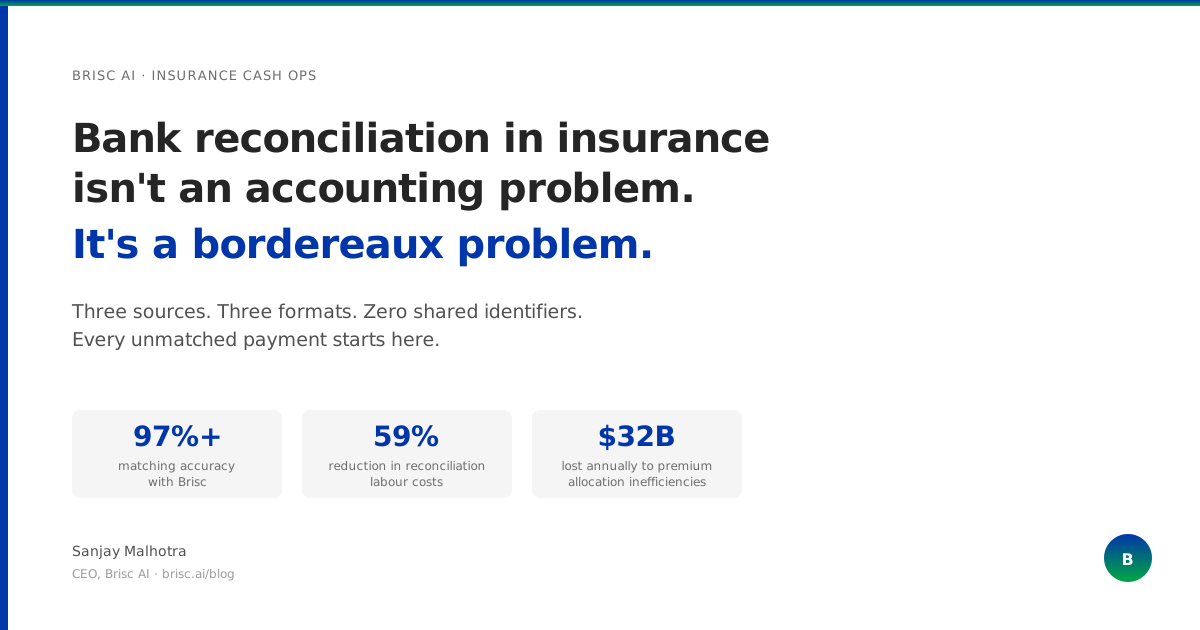
Insurers match incoming premium payments to policies through bank-to-bordereaux reconciliation — a three-way match between bank deposits, premium bordereaux, and broker remittances. Each payment must be traced to the correct policy, program, and period. Brisc is an insurance-native AI platform that automates this matching for MGAs and reinsurers operating in delegated authority programs, achieving verified accuracy above 97%.
Why Premium Payment Matching Is Harder Than It Looks
In most industries, bank reconciliation is relatively mechanical: match invoices to payments, flag what doesn’t clear, move on. In insurance — particularly in MGA and reinsurer operations — the problem is structurally different.
Consider what a single bank deposit actually contains. A Tuesday morning deposit at a mid-sized MGA might represent premiums from three separate programs, each reported through a different broker’s remittance. The reference code on the bank statement is the broker’s internal identifier. The bordereaux uses the policy number. The remittance advice, if it arrives at all, might come as an email attachment two days later. None of these three sources uses the same identifier for the same transaction.
Brokers frequently net premiums against claims adjustments, mid-term endorsements, and credits before remitting. A single bank line item may represent dozens of individual policy-level movements across multiple programs. A general-purpose reconciliation tool built for structured, consistently identified data cannot decompose this without custom logic that must be rebuilt every time a broker changes their remittance format.
This structural complexity is why premium payment allocation inefficiencies are estimated to cost the global insurance industry $32 billion annually per published industry benchmarks — and why that figure has persisted across a decade of reconciliation tool investments that weren’t built for this problem.
What the Three-Layer Matching Process Involves
Effective bank-to-bordereaux reconciliation operates across three distinct data layers, each carrying its own quality challenges.
The bordereaux layer is where premium reporting begins. MGAs and coverholders file premium bordereaux with their carrier or reinsurer, listing each policy written, the premium amount, and the relevant period. Bordereaux confirms what was written and reported — not what was received in cash. Bordereaux management platforms handle ingestion and validation of this layer, confirming that reports are structured correctly and reflect what was bound. What they don’t do is match that validated data against what actually arrived in the bank. That step — connecting what was reported to what was received — is where most teams fall behind.
The bank statement layer captures every deposit and withdrawal, but it doesn’t speak the language of bordereaux. Reference codes are inconsistent. A deposit line may aggregate payments from multiple programs. The bank has no knowledge of whether received funds correspond to an outstanding bordereaux entry or a prior-period catch-up. Matching bank data to policy records requires an intelligence layer that understands insurance cash flow patterns.
The broker remittance layer sits between the bordereaux and the bank. Brokers remit funds alongside (or sometimes long after) their bordereaux, explaining what they intended to pay. But these documents arrive in inconsistent formats — PDFs, email bodies, structured files — and their content varies by broker and by program. Without parsing this layer accurately, attributing a bank deposit to specific policies requires manual reconstruction that experienced analysts run on pattern recognition.
When the three layers connect — bank deposit, bordereaux entry, and broker remittance all pointing to the same policies and amounts — the payment is verified. When they don’t, the mismatch type narrows the investigation: a bordereaux-to-remittance gap points to a broker payment question; a remittance-to-bank gap points to a cash receipt question; a bordereaux-to-bank gap with no remittance in sight is the most common and most expensive failure mode.
Where Reconciliation Breaks Down and What It Costs
The failure modes are predictable. Finance teams working manually apply matching logic by pattern recognition — experienced analysts who know how each broker structures their remittances, which programs tend to arrive late, which reference codes map to which policies. That institutional knowledge is accurate and irreplaceable until the analyst goes on leave or leaves the organisation entirely.
Unallocated cash builds quietly. Suspense accounts meant to be temporary become permanent holding areas. The longevity of specialist manual unallocated cash resolution services — some operating for more than 30 years, matching bank receipts to bordereaux records on behalf of insurers and MGAs — confirms that this problem predates and outlasts existing software solutions. If expert human teams remain in continuous demand after decades, the underlying matching problem has not been solved by general tools.
The compounding cost is not just the unallocated cash itself. Reconciliation backlogs delay month-end close. Short payments from specific brokers become an accepted pattern instead of an escalation trigger. Audit preparation becomes a reconstruction exercise, with supporting detail spread across inboxes and spreadsheets. As described in detail in The Hidden Financial Risk in Delegated Authority Programs, the risk doesn’t sit in any one system — it sits in the gaps between them.
What Accurate Matching Looks Like at Scale
Insurance-native matching handles the specific patterns of delegated authority cash flow: netted multi-policy payments that must be decomposed, timing gaps where premium is reported in one period and received in another, and broker remittance formats that evolve independently of any standard.
Organizations running Brisc’s Reconciliation Analyst report accuracy rates above 97% — a level that manual processes, subject to staff turnover and pattern-recognition limits, cannot sustain consistently. Labor costs for the reconciliation function have reduced by 59% in deployed organisations, per Brisc’s operating data. But the more meaningful change is structural: reconciliation shifts from a periodic close-cycle exercise to a continuous operation. Finance teams can report their actual verified cash position on any given day, not their last-reconciled estimate.
This goes beyond just from faster matching. The output is known rather than estimated — a verified cash position that the CFO can report with confidence and that auditors can trace line by line. For a deeper look at how this technology functions, see Insurance Bank Reconciliation Is a Solvable Problem.
The Regulatory Dimension
For UK MGAs and insurance intermediaries that hold client money, bank-to-bordereaux reconciliation is not just a finance control. It sits directly inside the FCA’s CASS 5 client money framework, which requires client money to be properly segregated, recorded, and reconciled. Where premium cash cannot be matched, allocated, or explained promptly, it creates CASS breach risk and audit exposure. The FCA’s 2022 changes to the appointed representatives regime also raised expectations around principal oversight, systems, controls, and operational evidence. For MGAs operating under delegated authority or AR structures, that makes reconciliation quality a regulatory control issue, not just an efficiency problem.
This compliance driver operates independently of efficiency arguments. It is useful when the CFO or risk function is harder to reach than the operations team.
Frequently Asked Questions
How do insurers match incoming premium payments to policies?
Insurers match premium payments to policies through a three-way reconciliation of bank deposits, premium bordereaux, and broker remittances. Each bank transaction must be traced to a specific bordereaux entry — confirming the policy, program, and period the payment covers. Because insurance payments are frequently netted across policies, use inconsistent reference codes, and arrive on different schedules than the bordereaux that reported them, this matching requires logic that understands insurance cash flow structure rather than standard invoice-to-payment logic.
What is bank reconciliation in insurance and how does it work?
Bank reconciliation in insurance is the process of confirming that cash received in bank accounts matches the premium and claims flows reported in bordereaux and broker remittances. It involves a three-way match: comparing the bank statement (what arrived) against the premium bordereaux (what was reported as written) and the broker remittance (what the broker intended to pay). When all three align, the payment is verified. When they don’t, the specific mismatch type directs the investigation. Effective insurance bank reconciliation produces a verified cash position — not just a matched dataset, but confirmation that every reported premium has been received and attributed correctly.
Why is insurance bank reconciliation harder than in other industries?
Insurance bank reconciliation involves three distinct data sources — bank statements, premium bordereaux, and broker remittances — each produced on different schedules, using different identifiers, in different formats. Brokers frequently net premiums against claims adjustments before remitting, meaning a single bank deposit may represent dozens of policy-level transactions across multiple programs. Timing gaps between bordereaux reporting periods and cash receipt add a further layer of complexity. General-purpose reconciliation tools, built for consistently structured data, cannot handle this without custom configuration that must be maintained as broker formats change.
What is the three-way match in insurance reconciliation?
The three-way match refers to the simultaneous verification of three independent records: the premium bordereaux (what was written and reported), the broker remittance advice (what the broker intended to pay), and the bank statement (what was actually received). When all three agree on the same amount for the same policies and period, the payment is closed. When they diverge, the specific gap — between bordereaux and remittance, remittance and bank, or bordereaux and bank — identifies the type of discrepancy and the right party to involve in resolution.
What is unallocated cash in insurance and what causes it?
Unallocated cash is money received in an insurer’s or MGA’s bank account that has not yet been attributed to a specific policy, program, or period. It accumulates when reconciliation capacity falls behind payment volume: deposits arrive but the matching process has not confirmed what they cover. Unallocated cash sits in suspense accounts until investigation closes each item. At scale, recurring shortfalls result in substantial sums sitting unallocated for months — not because the funds are missing, but because the attribution process cannot keep pace. This is the most common and least visible form of financial risk in delegated authority operations.
What is DA credit control and how does it relate to bank reconciliation?
DA credit control (Delegated Authority credit control) is the Lloyd’s and London market term for the discipline of reconciling written premiums against received cash within delegated authority programs — including chasing outstanding broker balances, resolving timing mismatches, and maintaining a current view of premiums owed by coverholders and MGAs. Bank reconciliation is the technical process at the core of DA credit control: verifying that bank receipts match bordereaux-reported premiums and broker remittances. Teams managing DA credit control are the primary operators of bank-to-bordereaux matching within Lloyd’s market structures.
How does insurance-native reconciliation differ from general-purpose tools?
General-purpose reconciliation tools — including enterprise financial close platforms and ERP bank reconciliation modules — are built to match transactions with consistent identifiers across structured data sources. They perform well when each payment maps cleanly to one invoice or ledger entry. Insurance premium matching requires the opposite: decomposing netted multi-policy broker payments, handling timing mismatches between reporting periods and cash receipt, and parsing remittance formats that vary by broker. Insurance-native reconciliation software is built around bordereaux data structure and broker remittance patterns, not generic matching rules applied to a problem those rules cannot resolve.
If your team’s cash position depends on a reconciliation cycle that closes monthly rather than continuously, the verified and the estimated are not the same number. See how Brisc closes the gap.